Notice what shapes hard-court play
The same two players can produce quite different matches depending on the surface, the temperature, the time of day and whether a roof is open. Melbourne in January brings hard courts, strong sun, occasional extreme heat and evening sessions under lights. Learning to spot these factors helps explain why rallies sometimes look quicker, shorter or more ragged than you expected.
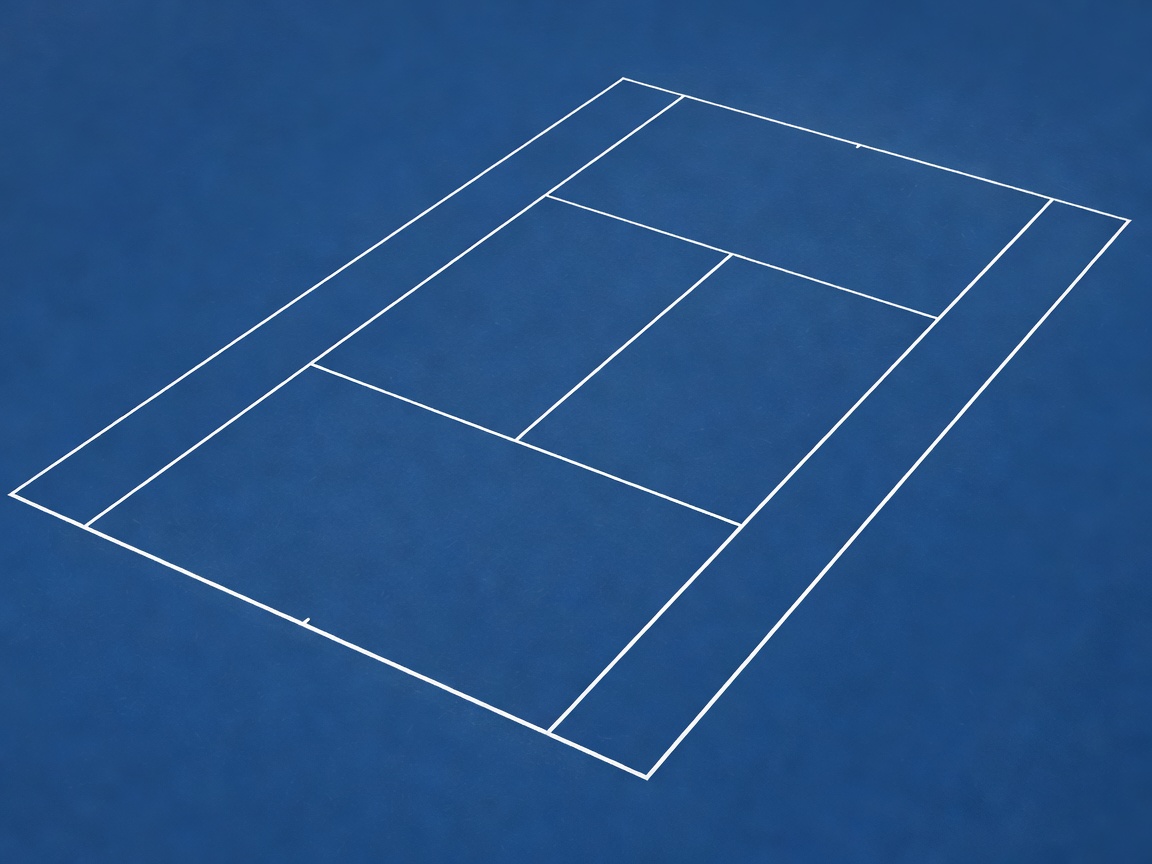
What a hard court is made of
A hard court is built on a firm base, typically asphalt or concrete, finished with layers of acrylic coating. Sand mixed into the top layers gives texture: more texture grips the ball and slows it, less texture lets it skid through faster. Organisers can therefore tune the pace of a hard court, and the balls chosen for an event also play a part.
Melbourne Park's courts have been blue in recent years. Whatever the colour, the key quality of a hard court is a predictable, true bounce, which rewards clean hitting and strong serving.
Comparing hard courts with clay and grass
Each Grand Slam surface favours slightly different skills. The comparison below describes general tendencies; individual courts and conditions vary.
General tendencies of the three Grand Slam surfaces Surface Bounce Pace Movement Majors played on it Hard Consistent, medium height Medium to fast, depending on the coating Firm footing; sliding is limited Australian Open, US Open Clay High, with heavy spin effect Slower Players slide into shots French Open Grass Low, can be irregular Fast Slippery; short steps Wimbledon Because hard courts sit in the middle, the Australian Open tends to suit a wide range of playing styles rather than one type of specialist.
Heat, sun and the summer schedule
January is summer in Melbourne, and some days are very hot. Heat affects play in two ways. Physically, players tire faster and take more care with fluids, cooling towels and pacing. Technically, warm air is thinner and the court surface heats up, so the ball tends to travel faster and bounce higher.
The tournament has a heat policy that can allow extra breaks, delay play on outer courts or lead to roofs being closed on the main arenas. The details are set by the organisers and have changed over time, so look for the tournament's own announcements rather than assuming a fixed temperature trigger.
Day sessions, night sessions and roofs
The show courts run day and night sessions. In the cooler evening air the ball usually feels heavier and slower, which can lengthen rallies and favour patient players. A match that starts in afternoon sun and finishes under lights may change character halfway through.
When a roof is closed, for rain or for heat, play becomes effectively indoor: no wind, no sun in the eyes and steadier conditions. Outer courts have no roof, so rain stops play there and can push matches into the following day.
Wind, light and line calls
On open courts, wind can push the ball long or hold it up, and players often adjust by hitting with more spin or serving with less risk from one end. Low sun can make tossing the ball for a serve awkward at certain ends of certain courts.
The Australian Open uses electronic line calling, so calls are made by the system and announced automatically rather than by human line judges. You will not see players challenging calls the way they do at events that still use line judges. Arrangements can change, so a broadcast may explain the current set-up.
A checklist for watching conditions
Before judging a match, run through a few questions:
- Is it a day or night session, and has the temperature changed since the start?
- Is the roof open or closed?
- Is it a show court or an outer court with more exposure to wind?
- Are players taking longer between points or using cooling breaks?
- Are serves landing more aces than usual, a sign of quick conditions?
- Are rallies short and error-filled, perhaps because of wind or a lively bounce?